
Glasscock Projected Versus Actual Release
“Projected Release Date” is a TDCJ field. It is an administrative estimate based on the sentence, offense date and type, time credit, and the release law that applies. “Maximum Sentence Date” is the calculated sentence endpoint. “Parole Eligibility Date” is merely the first date the person may be considered for parole. It is not an appointment for release.
Actual release is the custody event recorded when the person leaves a unit or jail. It may follow a court order, sentence completion, parole processing, or mandatory supervision. Mandatory supervision is release under rules before the maximum date when the law and Board action allow it. Parole is conditional release approved by the Texas Board of Pardons and Paroles. Neither is a full discharge, which means the sentence and supervision have ended.
Find Glasscock Release Date Records
Begin with custody level. Glasscock County has no operating county jail, so the sheriff may place a detainee in a receiving county. A local booking may never appear in TDCJ. Conversely, a felony transfer to state prison shifts the useful date source from the host jail to TDCJ.
- Call the Glasscock County Sheriff at 432-354-2361 and ask which jail physically holds or held the person.
- For a local sentence, obtain the booking number, signed judgment, sentence start, jail credit, local good-time calculation, forfeitures, holds, and posted release event.
- For state custody, search TDCJ by TDCJ or SID number when possible. Name searches also accept first name, last name, sex, and race.
- Compare projected release, maximum sentence, parole eligibility, location, offense county, and current status.
- Confirm a changing or historic result through TDCJ's official inquiry route and the court file.
The TDCJ offender search is the state-prison source, not a county booking list.
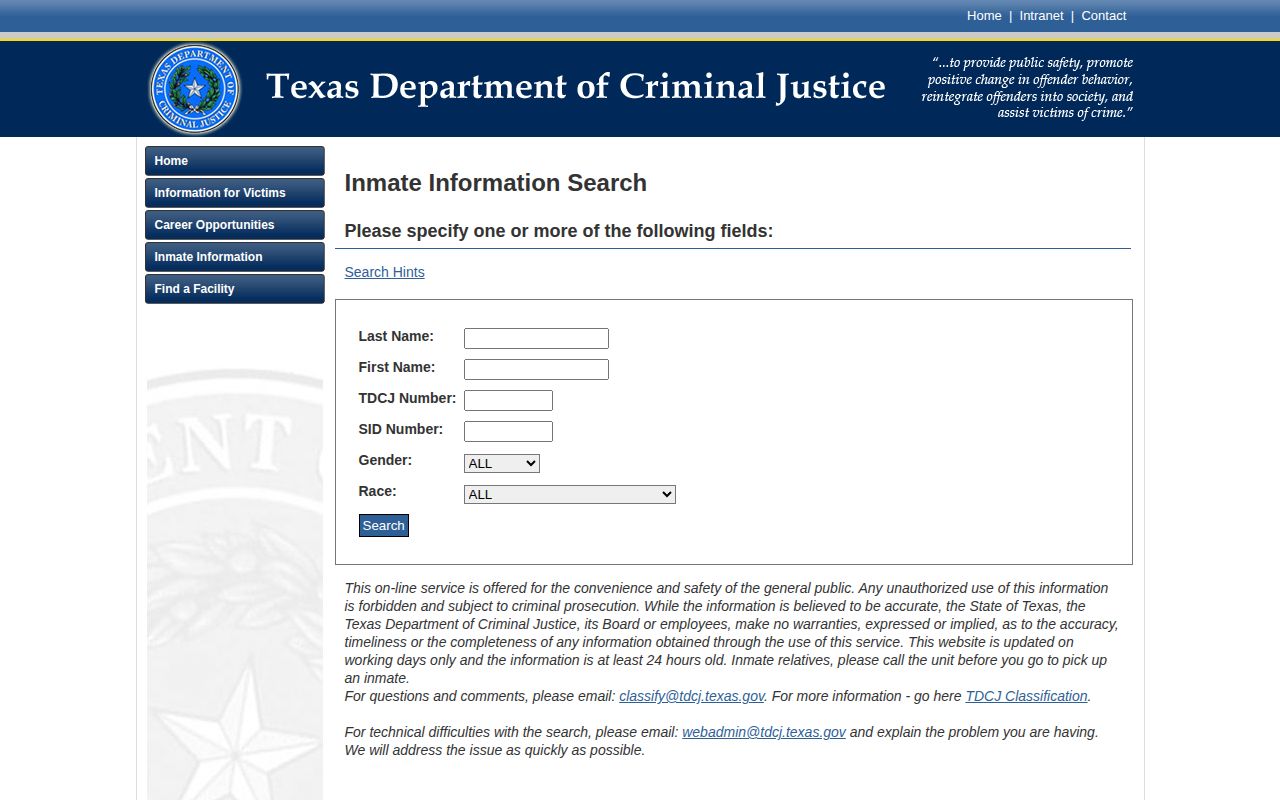
The form separates name fields from TDCJ and SID identifiers. A number search reduces mistaken identity and helps staff trace a state sentence.
Texas Credits Shape Release Dates
Texas Government Code Chapter 498 governs state good-conduct time. Good time is a privilege that affects classification and authorized eligibility calculations. It is not a vested cut from every court sentence. Earning rates can depend on classification and other facts, and credit may be forfeited after discipline. Offense date matters because Texas release law changed over time.
State-jail-felony sentences are a key exception. TDCJ states that these offenders do not earn ordinary good-conduct time. For a qualifying offense committed on or after September 1, 2011, a sentencing judge may award diligent-participation credit through a special process. That judicial credit is not automatic TDCJ credit and should be checked in the Glasscock court record.
The phrase “85 percent” is often applied incorrectly in Texas. There is no universal federal-style rule for all cases. For certain serious offenses and deadly-weapon findings, Government Code section 508.145 uses offense-specific parole calculations. The judgment, offense date, and findings under article 42A.054 control. Do not turn a general phrase into a personal prediction.
Why Glasscock Release Dates Change
A projection is recalculated when a fact or legal milestone changes. The source for each change differs:
| Factor | Possible effect | Best source |
|---|---|---|
| Jail-credit correction | Moves the sentence calculation | Judgment and custodian |
| Good-time loss | Changes an eligible computation | TDCJ or housing jail |
| Parole vote | Approves, denies, or defers release review | Board and TDCJ |
| Detainer or warrant | Delays release or causes transfer | Holding and requesting agencies |
| New sentence or court order | Changes authority or length | Sentencing court |
| Program requirement | Leaves approval pending completion | Board vote code and TDCJ |
TDCJ information is updated on working days and is at least 24 hours old. Its scheduled release information is expressly subject to change. Date the search, then confirm before arranging travel or pickup.
Confirm Glasscock Actual Release
For state custody, use TDCJ's projected-release and status inquiry guidance. Provide one person's full name, TDCJ number, and exact date of birth. When no number is known, the official route accepts other identifying details. Document-grade history may require a Public Information Act request.
The VINELink Release Check can add a custody-change alert, but it is not the final source. After a parole vote, release may still await processing. TDCJ advises relatives to contact the unit before pickup. For a county sentence, call the actual host jail and ask for its release transaction and all hold checks.
Pretrial detainees have no computed sentence-release date. Bond, dismissal, remand, or another court order controls their path. Remand means the court directs continued or renewed custody. The combined Glasscock County and District Clerk can provide the order or docket, while the housing jail records the physical departure.
Two Glasscock Release Calculations
Glasscock local-jail dates and TDCJ projected dates arise under different legal authority. For a local term, Code of Criminal Procedure article 42.032 governs county-jail good-conduct credit in the circumstances stated by law. The housing sheriff applies the relevant local policy, judgment credit, forfeitures, concurrent or consecutive terms, and holds. Ask for the actual calculation rather than applying a statewide prison formula.
For state prison, read TDCJ's Projected Release Date with Chapters 498 and 508. Start with the signed judgment, verify pre-sentence credit, identify the controlling offense date, and check parole or mandatory-supervision eligibility. Then confirm the revised date with TDCJ. Arithmetic alone cannot promise the hour the person will walk out.
The TDCJ definitions page shows why its sentence dates must remain separate.
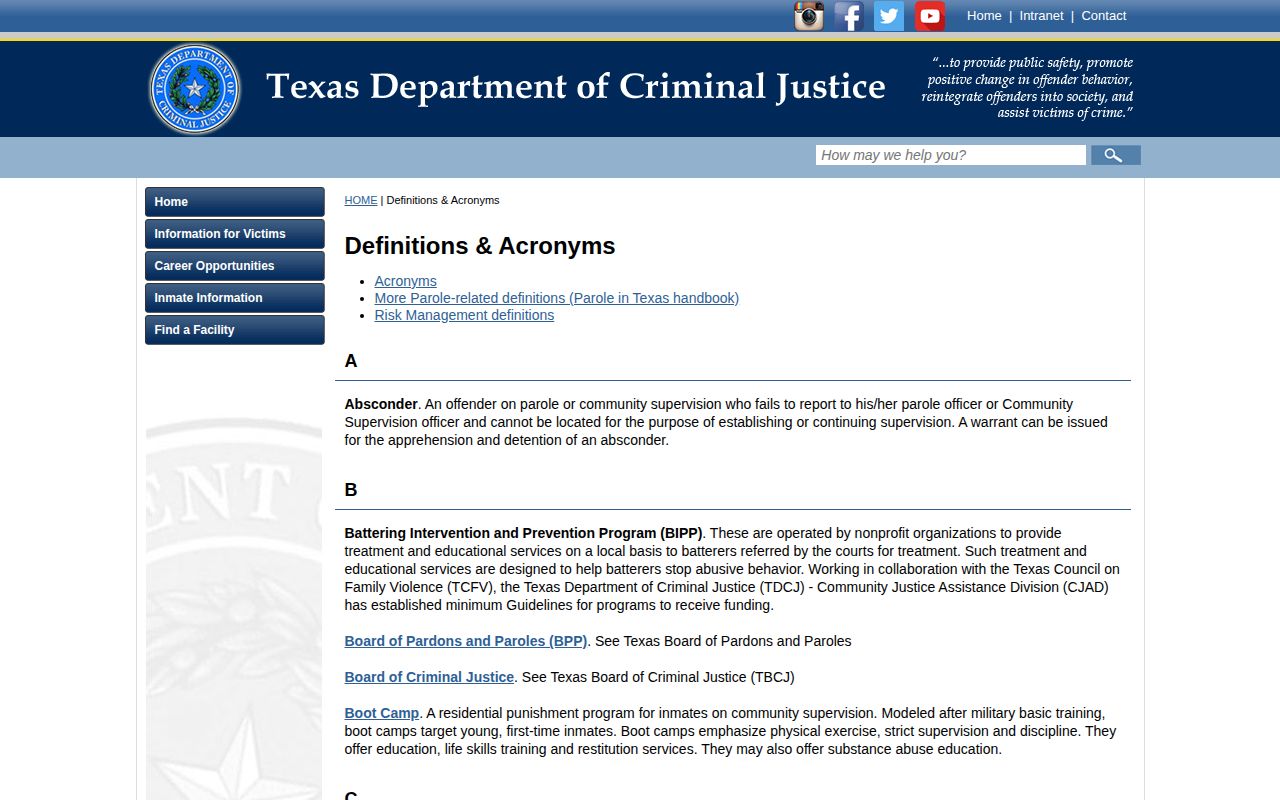
The official definitions give each date a narrow purpose and warn against treating eligibility as completed release.
A useful calculation record starts with the signed judgment. Confirm the sentence length and every day of pre-sentence jail credit. Next identify whether terms run at the same time or one after another. Check the offense date, sentence type, disciplinary forfeitures, and every active hold. For state custody, add the current Board status and any program-linked vote code. For local custody, ask the housing jail which good-conduct policy it actually applied.
Do not estimate a door-release hour from those papers. A date can remain subject to transport, records review, release-plan approval, property processing, and a final warrant check. The custodian's release transaction is the best evidence of physical departure. If another agency takes custody, record the event as a transfer and name the destination.
Mandatory supervision adds another layer. Under Government Code sections 508.147 through 508.149, eligibility depends on offense date and statutory exclusions, and Board review may apply. For a person who is not eligible, TDCJ's projected date can match maximum expiration unless parole happens first. For an eligible case, calendar time, applicable credit, and Board action can shape the projection. That is why “projected” must remain in the description.
When a TDCJ result is unclear, use the official email or telephone channels with exact identifiers. The general locator handles custody and location. The Board route concerns review status before a vote. The Parole Division release-status route addresses processing after a favorable vote. Each office answers a different question, so note which one supplied the date.
- Projected release
- An administrative estimate that can change.
- Maximum sentence date
- The calculated end of the sentence.
- Parole eligibility
- The first possible review point, not promised release.
- Actual release
- The recorded departure from the custodian.
- Discharge
- The end of both custody and remaining sentence supervision.
A defensible statement is specific: the housing jail recorded departure on one date under a named disposition, the court signed an order on another date, and TDCJ showed or did not show later custody when checked. Avoid saying a person is free or that every case ended unless all relevant records establish it.
For a short local term, ask whether jail credit applies to every charge in the booking. One count can show time served while a second warrant or consecutive sentence keeps the person held. Also ask whether good-conduct credit was awarded, lost through discipline, or restored under the actual host jail's policy. Glasscock's arresting agency cannot substitute a TDCJ prison formula for that local calculation.
For state custody, retain the date on which the online record was viewed. Compare later changes instead of treating the first screen as permanent. If a projection moves, seek the reason from TDCJ or the court with the inmate number and judgment at hand. A corrected jail-credit entry, new sentence, forfeiture, Board action, or detainer can explain the change without making the earlier screen fraudulent.
Pickup planning should use the releasing unit's current instructions. TDCJ advises contact with the unit because processing and location can change. A family member should not travel to the Glasscock sheriff office for a state-prison release, and no one should treat the historic county courthouse/jail as a current release desk.
Parole review introduces dates that are easy to confuse with release. Texas panels review files and issue vote codes rather than holding an ordinary courthouse-style hearing for each person. An FI-1 outcome generally authorizes release when eligible, while an FI-2 identifies a future month and year. Program-linked outcomes such as FI-3R or FI-4R require designated program completion. A denial may set another review or direct additional time. None of these codes supplies a door-release timestamp.
After approval, TDCJ must still process the release. A proposed plan may need approval, a detainer may need resolution, or a required program may lack an immediate placement. For that reason, verify both the Board outcome and TDCJ's current release-processing status. Once the person leaves, supervision records can confirm whether the release is parole or mandatory supervision. A favorable vote, standing alone, is not proof of departure.
The court file can resolve another common conflict. A signed judgment may award jail credit that is not yet reflected in a dynamic corrections screen. A later order may modify the sentence, and an appellate mandate can change the result. Ask the Glasscock County and District Clerk for the judgment, sentence, credit, and later orders. Then provide those identifiers to the custodian when asking for a recalculation.
When terms run consecutively, the end of one sentence does not release the person from the next. Concurrent terms run at the same time, but separate holds still can block departure. These facts should come from the judgments and agency calculation, not from adding dates on a calendar. A clear request asks the custodian to list each controlling sentence and hold.
Public Record Search
Sponsored Results