
Glasscock County Three-Day Releases
No official Glasscock sheriff website offers a rolling 72-hour release page. There is no verified URL, field inventory, update cadence, photo indicator, or online retention rule for such a list. VINELink is not a substitute three-day roster, and a current-custody page would not be a historical release archive. Third-party jail directories also cannot establish an official Glasscock County feed.
The official record changes with the physical custodian. Texas Commission on Jail Standards data labels Glasscock County as having no jail. A Glasscock arrest may therefore produce a booking in a receiving county. For a 72-hour review, the first task is not filtering a local roster. It is learning which host jail held each booking during the requested dates.
Glasscock Weekend Release Window
A 72-hour period is useful when a same-day search begins after a weekend, holiday, or late-night custody change. Court staff, jail records staff, and online systems may not all reflect an event at the same moment. The physical departure can occur before a release code is visible online, while a court order may be signed before another hold clears. Each timestamp records a different part of the process.
Define the interval precisely. “The last three days” can mean three calendar dates or a rolling period counted back from the current hour. State the start and end date, local time, and time zone in a records request. Ask whether the jail's timestamp reflects the actual exit or the later entry of a release transaction. That detail prevents an event near midnight from being assigned to the wrong day.
Holidays and weekends do not prove that records will lag. They simply increase the value of checking more than one source. The host jail confirms physical departure. The court file confirms the order or judgment. VINELink reports the custody event supplied by a participating agency. A transfer destination confirms whether custody continued elsewhere.
Note: For events clearly within the current day, use Released Last 24 Hours and verify the result with the same custodian.
Check Glasscock 72-Hour Releases
Prepare a list of likely bookings before calling. Use the full legal name, date of birth when needed, approximate arrest date, arresting agency, and any court or booking number. Since Glasscock County has no jail, ask the sheriff to identify the receiving facility for the specific arrest rather than assuming the same jail handled every person.
- Set an exact 72-hour start and end time. Record when the search begins.
- Call the Glasscock County Sheriff's Office at 432-354-2361 and identify each receiving jail and booking number.
- Ask each host jail whether it has an existing release log, closed-booking report, or recent-release view for that period.
- Separate community releases from transfers to another jail, TDCJ, BOP, ICE, or another agency.
- Review VINELink for matching custody events, using the exact agency and identifier.
- Request the related bond order, dismissal, judgment, sentence, or release order from the Glasscock court record.
- Recheck events that fall near the start or end of the interval and document the retrieval time.
This process produces a defensible list only when each entry is tied to a booking and custodian. A list of names copied from another county's website may contain unrelated arrests. For one named person's full custody trail, begin with the Glasscock County released inmates lookup.
For more than one booking, keep a simple case table with separate columns for the arresting agency, housing jail, booking number, event code, event time, destination, and source-check time. Do not merge records merely because names match. An agency identifier gives a much safer link between the jail transaction and court file, while a date of birth can help resolve a name conflict when the custodian requires it.
Glasscock 72-Hour Release Fields
Because no Glasscock County online feed exists, no visible set of columns can be promised. The records below are fields to request from the host jail if maintained and releasable. Ask for the existing release log or jail-management record rather than demanding a new report assembled from scratch.
| Field | Use in a three-day review |
|---|---|
| Name and booking number | Matches each entry to one booking rather than a similar name. |
| Arresting agency | Connects an out-of-county booking to Glasscock County. |
| Housing facility | Names the agency responsible for the physical custody event. |
| Release date and time | Places the departure within or outside the defined 72-hour interval. |
| Release authority or code | May distinguish bond, court order, time served, completion, or transfer. |
| Destination agency | Shows whether another custodian received the person. |
| Record posting time | Reveals whether an administrative update followed the actual departure. |
A booking can close for reasons other than release to the community. Transfer means custody moved. Parole is supervised release from state confinement. Discharge means a sentence or supervision term has ended. A detainer is another agency's legal request or basis to hold or receive a person. Use the exact code and ask the custodian to define it.
Glasscock Releases Cross County Lines
The housed-elsewhere pattern is the key local data issue. The TCJS population reports provide official aggregate context for county jail populations and people housed elsewhere. They do not identify who was released during a chosen window, and their periodic reporting cannot replace a booking-level record.
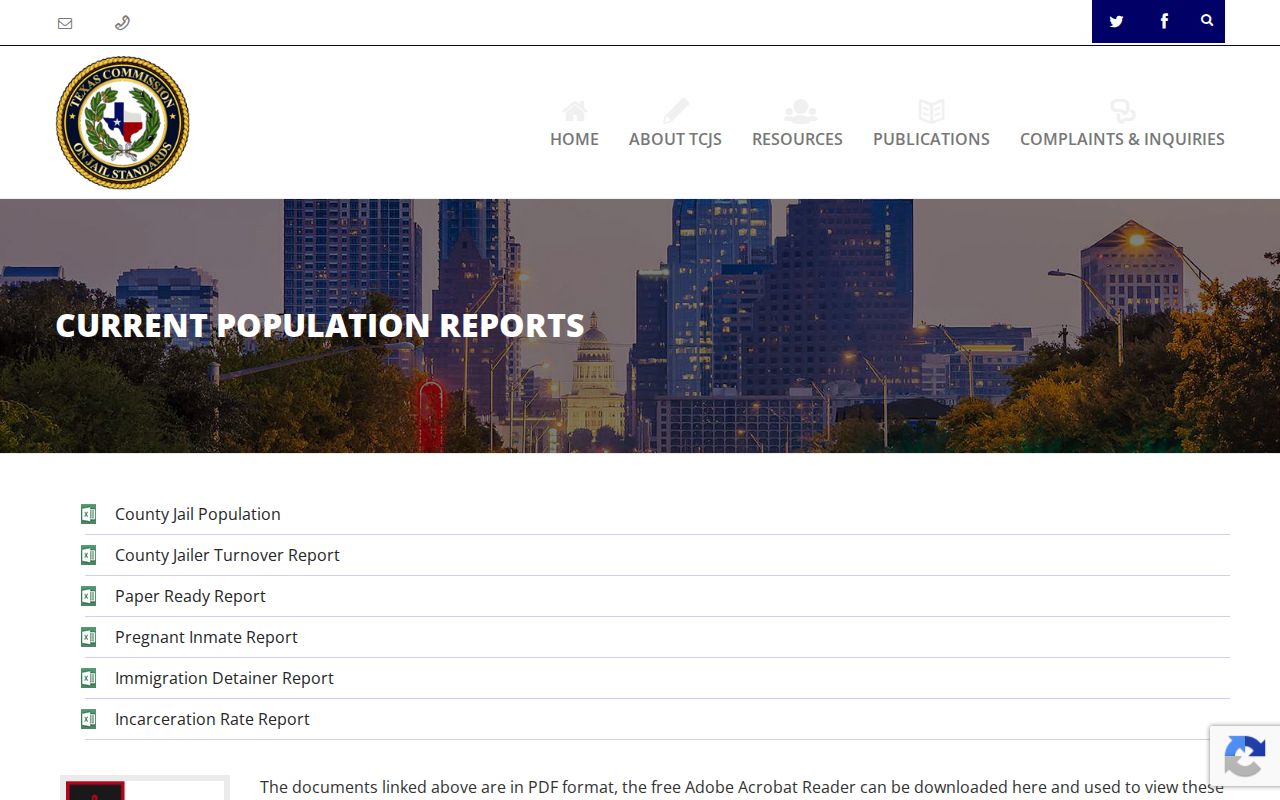
The report image helps explain why the correct 72-hour search may need to move beyond county boundaries, but only the sheriff and receiving jail can connect a named person to a particular booking.
Ask Glasscock County which jail accepted the person and on what date. Then search or request records from that facility. If several jails housed people during the same interval, each custodian may hold a separate log. Keep the arresting agency and host jail in distinct columns so a reader does not mistake the county of arrest for the place of confinement.
If the host booking closed as a transfer, follow the destination. The TDCJ offender search covers people received into Texas state custody. The BOP locator covers many federal prisoners. ICE uses its own detainee locator. None is an official Glasscock 72-hour release feed.
Request Glasscock Three-Day Logs
A focused request should name the host jail, the 72-hour start and end points, Glasscock County as the arresting jurisdiction, and the specific existing records sought. Useful terms include “release log,” “closed booking report,” “booking summary,” and “jail-management release transaction.” Include booking numbers when known. Ask for the release timestamp, disposition code, release authority, and destination or transfer field.
The Texas Public Information Act governs access to state and local government records, subject to its exceptions. An agency need not build a custom three-day report if no such report exists. It can, however, search for responsive records that it maintains. The Attorney General's request guidance explains how to identify records and submit a written request.
No special Glasscock release-log price was found on the sheriff page. Request an estimate under the applicable cost rules. Narrow dates, booking identifiers, and record types can make the request easier to process. If the sheriff did not create the host jail's release transaction, ask it to identify the actual custodian rather than assuming it holds every field.
Reconcile Glasscock Release Dates
Three date types often appear in a 72-hour review: the court order date, the physical departure time, and the system update time. They can differ without any record being wrong. A bond order may be signed first, a hold may clear later, and the host jail may post the release transaction after departure. VINELink may then display the agency-fed event on its own schedule.
The combined Glasscock County and District Clerk can help locate the court docket, bond order, judgment, dismissal, sentence, or discharge order. Court records explain legal authority. They may not show the exact time the person walked out of the jail. For that detail, use the host jail's closed booking.
| Source | Question it answers |
|---|---|
| Glasscock sheriff | Which facility took the booking and where custody moved. |
| Receiving jail | When the person physically departed and under what code. |
| Glasscock court | Which order, judgment, or bond authorized the legal change. |
| VINELink | Which custody event the participating agency supplied. |
| Follow-on agency | Whether custody continued after the host booking closed. |
When sources conflict, let each creator speak for its event. Preserve the booking number and time of retrieval. Do not silently select the date that best fits the requested window. A precise statement distinguishes release from one jail, transfer to another agency, state supervision, and final discharge.
A final three-day summary should also record unsuccessful checks. State that no official Glasscock County 72-hour feed exists, then name each host jail or system searched and the time of the check. “No record found” has little value without that scope. If the receiving jail cannot be identified, the result remains unresolved rather than released. That wording preserves the difference between a confirmed custody event and a gap in public access.